Support It

  • Subscribe to our RSS feed.
  • Twitter
  • StumbleUpon
  • Reddit
  • Facebook
  • Digg

Monday, 28 October 2013

Life's a Beach. Order Emerging From Chaos.

Posted on 02:45 by Unknown
Listen to any creationist pseudo-scientist and you be told that something can't come from nothing and that order can't come from chaos, because both of those violate the second law of thermodynamics.


What they really mean of course is that both of those show we can explain the Universe and life on Earth without invoking magic or magic designers, so they'd rather you didn't believe they can both happen by perfectly natural processes. That would dangerously undermine their claim to power and influence and, most importantly, damage their income stream and mean they would need to earn an honest living.


I've already dealt at length with the nonsensical notion that nothing ever existed before there was something in Much Ado About Nothing so I'll now look at the nonsensical claim that order can't emerges from chaos without a magic designer, which I've also touched on with Order From Chaos.


What creationist pseudo-scientists won't tell you of course is that you can observe for yourself order emerging from chaos in, for example, the sand on a beach, as this photograph I took yesterday on a beach in Portugal clearly shows. What can be seen is structure within the otherwise chaotic arrangement of grains of sand due to the action of chaotically arrange water molecules and suspension of sand grains.


One of the great things about being an atheist and knowing a little about science is that you can recognise examples of emergent order and don't need to dismiss them as impossible because you have a superstition which says they are impossible. Look at the photograph and you will see a pattern of diamond shapes on the surface of the sand as the seawater flows off following the breaking of a small wave on a gently-sloping beach.


What happens is that a larger grain of sand is heavy enough to resist the carrying power of the flowing water and settles out. Then small eddies form behind it as the water flows around it and the main flow is channeled into a widening fan shape. This allows more sand grains to settle out in the widening zone downstream of the original sand grain. Repeat this a thousand times over a small area and the resulting interference pattern creates the system of criss-crossing micro-channels and a diamond lattice of newly deposited sand. Structure and order has emerged from chaos and all in complete accord with the laws of thermodynamics.


The driving force which has produced this is of course gravity. Gravity produces the flow of water over the sand and gravity causes the sand grains to settle out when the water loses the power to carry them. Just as gravity can account for structure emerging from the chaos of sand and water so gravity can account for the formation of galaxies, stars and stellar planetary systems.


The analogous force to gravity in living systems is natural selection. Just as gravity causes order to emerge from chaos, so natural selection causes gradual change to emerge from the chaos of random change in genes to produce variation. Just as gravity caused order to emerge from the chaos of randomly distributed particles in the Universe, so natural selection caused diversification to emerge from the chaos of random mutations in DNA.


For reasons of selfishness and greed, creation pseudo-scientists would have you ignore the wonders such as this to be found all around in nature and to dismiss them all as the product of magic, just like Bronze-Age goat herders did.


Share
Twitter

Tweet
StumbleUpon

Reddit

submit to reddit


Read More
Posted in | No comments

Saturday, 26 October 2013

A Lot of Cock in Portugal

Posted on 15:33 by Unknown
You see it everywhere; in every tourist shop on ceramics and tea-towels; on tee-shirts and aprons; on pendants and hair-slides and as stand-alone ornaments. You'd be amazed at the number of different ways the Portuguese have found to market the Cock of Barcelos (O Galo de Barcelos).


It has its origins in a Catholic 'miracle' - one of many that abound in this area of Europe from a time before the growth in science and education had made miracles, miracle-workers and prophets largely obsolete in most of the civilised world. The story is normally set in the 17th century and usually involved a young man on a pilgrimage from Galicia to Santiago de Compostela who happened to pass through Barcelos in North-Western Portugal where he was accused of the theft of some silver from a rich man in the town, arrested, tried and condemned to be hanged.


On the day of his execution he pleaded with the hangman to be allowed to speak to the judge who had condemned him. He was taken to the judge's house where the judge was about to entertain guests to dinner, the centrepiece of which was a roasted cockerell. The judge agreed to speak to the man but refused to reprieve him, whereupon the devout pilgrim swore that the cockerel would crow as he was being hanged to show he was innocent. How he managed to identify the roast fowl as male is not stated and would be a minor miracle in itself.


The young man was then taken to the gallows only for the roast cockerell to leap from the plate and crow, whereupon the judge ran to the gallows to reprieved the innocent man only to discover that the hanging had failed due to a faulty knot. Curiously, whichever underling was in charge of the cockerell miracle they had not had the full confidence of whoever was running the whole thing and another miracle had had to be performed just incase the cockerell one failed to work. It always pays to have a back-up plan even when you're inerrant, omniscient and can override the natural order at will it seems.


Anyway, in the best fairy-tale tradition, they all lived happily ever after. In fact, the legend has the young man returning to Barcelos some years later as an artist and sculpture to sculpt the Crucifix of the Lord of the Rooster to thank the Virgin Mary, who apparently organised the whole thing.


Now, if you're prepared to believe that a roast chicken can come back to life and crow you'll have no problem believing that a hangman would take a condemned man to chat with the judge before hanging him; that a judge would interrupt a banquet with friends to listen to him; that this audience would take place in front of the said judge's friends, and that the assembled dinner guests and the judge would neglect to eat the centrepiece of the dinner leaving intact and ready to spring back to life, you'll probably have no difficulty believing this tale.


Although a number of devout Portuguese seem to have difficulty believing parts of it as it exists in several different equally implausible versions:

  • In one, the Galician was a guest of the rich man whose silver was stolen.

  • In another he was falsely accused by the owner of an inn in which he was lodging.

  • In a third, it was a father and son on a pilgrimage when the son was falsely accused. It was the father who called upon the rooster to crow.

  • In a fourth, the judge is served the roast cock during the trial (as they do) and the trial is halted when the cock crows to order.

  • And in yet another, the young man is not identified as travelling from Galicia.

One wonders what other miracles were dreamed up by local Catholic myth-makers before the supply of miracles, miracle-workers and prophets dried up. Noticeably, they still seem to be doing the same in some parts of the world, as we saw with the phoney Mother Theresa miracles. (See here and here)


Curiously, and against the trend, the number of miracles attributed to recent Popes seems to have increased at around the time they began to be accused of complicity in covering up stories of systematic child abuse by paedophile clerics. Of course, being declared a saint and miracle-worker by an inerrant Pope means that accusations of criminal conspiracy must be false because genuine saints wouldn't do that sort of thing.


Share
Twitter

Tweet
StumbleUpon

Reddit

submit to reddit


Read More
Posted in Miracles, Religion | No comments

Friday, 25 October 2013

Evolution - Making a Difference In Portugal

Posted on 15:31 by Unknown
The thing about evolution, in fact the main thing about evolution, is not how it leads to new species but how it accentuates small differences and so produces a whole range of variability below the species level - subspecies, regional varieties, races, etc, in different environments.


It does this of course because natural selection act as a filter letting through the 'fitter' alleles at each generation and so increasing the probability of them occurring in the next generation's gene pool. Provided it conveys an advantage a rare allele quickly becomes common, as I showed with a simple spreadsheet in Playing With Evolution.


This was highlighted for me today in Lisbon when I was sitting enjoying a refreshing água mineral com gás (that's a sparkling mineral water) and custard tarts in the grounds of the Castelo de Sao Jorge today. I saw a small bird which looked like a Great Tit (Parus major) only different. I'm familiar enough with British Great Tits to know when they don't look quite right.


The history of European birds, and especially those sedentary species like the titmouse family, is very interesting because it is intimately associated with the last Ice Age and is a wonderful example of how the environment drives evolution. A word of warning though! If you type "Great Tits in Portugal" into Google, be careful what you click on in the result list!


Portugal, as I'm sure you all know, lies on the western edge of the Iberian Peninsula which consists solely of Spain, Portugal and British-owned Gibraltar. The Iberian Peninsula is separated from the rest of Europe by the Pyrenees Mountains which act as a barrier to the movement of all sorts of species, like butterflies, moths and small birds, who can only normally interact with other members of their species or genus via narrow coastal strips on the Atlantic or Mediterranean coast. In effect, the Iberian members of a species have a almost isolated gene pool and so would be expected to evolve in their own direction more or less regardless of what is happening in the rest of Euro-Asia.


And that is exactly what we find.


Iberia has an abundance of races, subspecies and varieties of very many European species, and all of these have come about since the last Ice Age, when Iberia, Italy and the Balkans acted as refuges for many European species as ice sheets covered Northern Europe. In effect, the rest of Europe was repopulated from these refuges as the ice retreated some 10,000 years ago and the differences we now see either arose during isolation in these southern refuges or has arisen since. For more on how this procees probably drove diversification in Europe, see Creationists' Macro-Evolution Lie.


So, although I couldn't find any particular references to a particular Iberian form of the Great Tit, and it may well have been just a juvenile, an atypical individual or one showing a seasonal colour variation, the chances are good that what I saw was a regional variety, produced by isolation and by change in the frequency of particular alleles due to the effect of natural selection on its ancestors. The probability is that I saw just another example of evolution in progress.


Share
Twitter

Tweet
StumbleUpon

Reddit

submit to reddit


Read More
Posted in Evolution, Science | No comments

Wednesday, 23 October 2013

Catholic Violence and the History of Japan

Posted on 14:12 by Unknown


Japanese-Portuguese Christian Bell, 1570
Apparently, the reason Christians, mostly Catholic, were persecuted in Japan was because the authorities became alarmed at their intra-sectarian violence and feared it would destabilise peaceful Japanese society which was mostly Buddhist and Shintoist (it's quite possible to be both).


I got this little-known (in the West) snippet of information from one of my brothers in law yesterday evening. He is an acknowledged expert in Japanese art, being the head of Japanese conservation for a major art museum in Boston, MA, USA. He has worked and studied in Japan and speaks fluent Japanese. We had been talking about our impending trip to Lisbon, Portugal tomorrow and got on to discussing the influence of Portugal on Japan and vice versa. He has also worked and taught Japanese art and conservation in Lisbon.


Although some people believe Nestorian (i.e., Syriac or Eastern) Christianity had already been introduced to Japan earlier, the main systematic effort to introduce it came from the Portuguese, and later the Spanish, Catholics between about 1550 and 1600. These missionaries were sponsored by their respective governments and their main function was to act as the advanced guard for Western colonialism and open up Japan to Western Traders - Portuguese and Spanish, naturally - just as they had done and were to do in so much of the world. To that end the missionaries would 'convert' the local officials who would then be especially favoured by the traders. The Portuguese missionaries were exclusively Jesuite while the Spanish were mostly Franciscans and Dominicans.


Once trade was established the traders, backed by the odd warship, would 'negotiate' favourable trading terms, often including handing over the docks and the port towns to the traders to become, in effect, 'free' ports controlled by foreign powers and exempt from taxes and excise duties - a practice that would be called 'smuggling' unless backed by the threat of military intervention. Imagine Boston, San Francisco, Rotterdam or Bristol in foreign hands because it was considered necessary for free trade and the smugglers had got fed up with being arrested!


But apparently, it wasn't so much the creeping colonialism which alarmed the Japanese authorities. It soon became apparent that, whilst preaching peace and brotherly love for all mankind, and whilst professing love for the non-Christian Japanese, what the missionaries really detested were Christians of other sects and from other countries who were trying to muscle in on their racket, a rivalry which often erupted in violence, even between Catholics of different orders. The origins of this, of course, were back in Europe, in particular with different Popes blowing in the political wind and abandoning principles for short-term gain and plumping for whichever side was promising the biggest return:


...religion was also an integral part of the state and evangelization was seen as having both secular and spiritual benefits for both Portugal and Spain. Wherever these powers attempted to expand their territories or influence, missionaries would soon follow. By the Treaty of Tordesillas, the two powers divided the world between them into exclusive spheres of influence, trade and colonization. Although at the time of the demarcation, neither nation had any direct contact with Japan, that nation fell into the sphere of the Portuguese.


The countries disputed the attribution of Japan. Since neither could colonize it, the exclusive right to propagate Christianity in Japan meant the exclusive right to trade with Japan. Portuguese-sponsored Jesuits under Alessandro Valignano took the lead in proselytizing in Japan over the objection of the Spaniards. The fait accompli was approved in Pope Gregory XIII's papal bull of 1575, which decided that Japan belonged to the Portuguese diocese of Macau. In 1588, the diocese of Funai (Nagasaki) was founded under Portuguese protection.


In rivalry with the Jesuits, Spanish-sponsored mendicant orders entered into Japan via Manila. While criticizing Jesuit activities, they actively lobbied the Pope. Their campaigns resulted in Pope Clement VIII's decree of 1600, which allowed Spanish friars to enter Japan via Portuguese India, and Pope Paul V's decree of 1608, which abolished the restrictions on the route. The Portuguese accused Spanish Jesuits of working for their homeland instead of their patron. The power struggle between Jesuits and mendicant orders caused a schism within the diocese of Funai. Furthermore, mendicant orders tried in vain to establish a diocese on the Tohoku region that was to be independent from the Portuguese one.


Wikipedia - History of Roman Catholicism in Japan


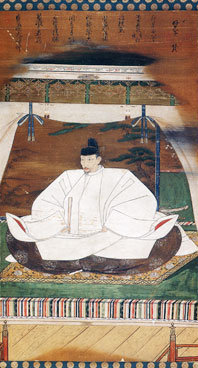
Toyotomi Hideyoshi
So, the Japanese authorities acted to 'discourage' the growth of Christianity and prohibit the activities of the 'missionary' shock troops and so nip Western colonialism in the bud. The arrogance, racism, and casual brutality of the Catholic missionaries was to result in a disaster for Christianity in Japan from which it was not to recover until recent time:


By 1587, Toyotomi Hideyoshi had become alarmed, not because of too many converts but rather because the hegemon learned that Christian lords reportedly oversaw forced conversions of retainers and commoners, that they had garrisoned the city of Nagasaki, that they participated in the slave trade of other Japanese and, apparently offending Hideyoshi's Buddhist sentiments, that they allowed the slaughter of horses and oxen for food. He was concerned that divided loyalties might lead to dangerous rebels like the Ikkō-ikki Sect of earlier years and produced his edict expelling missionaries. However, this decree was not particularly enforced.


Toyotomi Hideyoshi promulgated a ban on Catholicism in form of the "Bateren-tsuiho-rei" (the Purge Directive Order to the Jesuits) on July 24, 1587. Hideyoshi put Nagasaki under his direct rule to control Portuguese trade.


When Toyotomi Hideyoshi issued the Bateren-tsuiho-rei, the Jesuits in Japan, led by Coelho, planned armed resistance. At first, they sought help from Kirishitan daimyo but the daimyo refused. Then they called for a deployment of reinforcements from their homeland and its colonies. But this plan was vetoed by Valignano. Like the Kirishitan daimyo, he realized that a military campaign against Japan's powerful ruler would bring catastrophe to Catholicism in Japan. Valignano survived the crisis by laying all the blame on Coelho. In 1590, the Jesuits decided to stop intervening in the struggles between the daimyo and to disarm themselves. They only gave secret shipments of food and financial aid to Kirishitan daimyo.


On February 5, 1597, twenty-six Christians – six European Franciscan missionaries, three Japanese Jesuits and seventeen Japanese laymen including three young boys – were executed by crucifixion in Nagasaki. These individuals were raised on crosses and then pierced through with spears. While there were many more martyrs, the first martyrs came to be especially revered, the most celebrated of which was Paul Miki. The Martyrs of Japan were canonized by the Roman Catholic Church on June 8, 1862 by Blessed Pius IX,[17] and are listed on the calendar as Sts. Paul Miki and his Companions, commemorated on February 6, February 5, the date of their death, being the feast of Saint Agatha.


Persecution continued sporadically, breaking out again in 1613 and 1630. On September 10, 1632, 55 Christians were martyred in Nagasaki in what became known as the Great Genna Martyrdom. At this time Catholicism was officially outlawed. The Church remained without clergy and theological teaching disintegrated until the arrival of Western missionaries in the 19th century.


Wikipedia - History of Roman Catholicism in Japan


Meanwhile, the Dutch, by assuring the Japanese authorities that the last thing they were bothered about was religion, and by sticking to their word, cornered the market in Japanese trade with the West.


Just another example of how religion poisons everything; in this case peaceful contact with, mutually beneficial trade with and culturally enriching contact with, newly-discovered people and societies in the early days of European exploration and the growth in world trade. A legacy of this first contact with the Christian West was a Japanese society deeply suspicious of Western imperialism, which in turn resulted in the Japanese 'preemptive' strike on Pearl Harbour in 1942 in response to a perceived penetration into South-East Asia and the Pacific which was becoming increasingly threatening to Japan.


Share
Twitter

Tweet
StumbleUpon

Reddit

submit to reddit


Read More
Posted in Catholics, History, Religion | No comments

Sunday, 20 October 2013

God Hates Frogs

Posted on 03:54 by Unknown
The Invasive Chytrid Fungus of Amphibians Paralyzes Lymphocyte Responses


The problem with being an intelligent designer is that when you change your mind and decide your creation was a mistake it can be very difficult to kill just that creation off and not harm the others. Look what happened when it decided to correct its mistake with humans, for example. It ended up killing everything else off too when it used a sledgehammer to crack a nut.


So, when the Intelligent Designer decided it had made a mistake with all those frogs it had to come up with something really clever. It chose a fungus - Batrachochytrium dendrobatidis - to do the work but that wasn't as simple as it sounds. The problem was it had provided frogs with a way to fight fungal infections, what with them living in conditions normally conducive to fungal growth. It had provided them with a group of specialist body cells to cope with them, as well as bacteria. These cells normally crawl around looking for invading cells and ingesting them, then they program other cells to produce antibodies which quickly kill off any more cells if they get into the frog's body.


So, this was a problem for the Intelligent Designer's plan to kill of all the frogs with a fungus.


Luckily it thought up another brilliant plan and changed the fungus a little bit so it now turns off the frog's immune response and allows it to kill the frog and use its body to produce more fungi.


Abstract

The chytrid fungus, Batrachochytrium dendrobatidis, causes chytridiomycosis and is a major contributor to global amphibian declines. Although amphibians have robust immune defenses, clearance of this pathogen is impaired. Because inhibition of host immunity is a common survival strategy of pathogenic fungi, we hypothesized that B. dendrobatidis evades clearance by inhibiting immune functions. We found that B. dendrobatidis cells and supernatants impaired lymphocyte proliferation and induced apoptosis; however, fungal recognition and phagocytosis by macrophages and neutrophils was not impaired. Fungal inhibitory factors were resistant to heat, acid, and protease. Their production was absent in zoospores and reduced by nikkomycin Z, suggesting that they may be components of the cell wall. Evasion of host immunity may explain why this pathogen has devastated amphibian populations worldwide.


The Invasive Chytrid Fungus of Amphibians Paralyzes Lymphocyte Responses

J. Scott Fites, Jeremy P. Ramsey, Whitney M. Holden, Sarah P. Collier, Danica M. Sutherland, Laura K. Reinert, A. Sophia Gayek,

Terence S. Dermody, Thomas M. Aune, Kyra Oswald-Richter, and Louise A. Rollins-Smith

Science 18 October 2013: 342 (6156), 366-369. [DOI:10.1126/science.1243316]


This, of course, looks just like the sort of destructive arms race that evolutionary biologists predict will happen frequently by Darwinian Evolution, and looks just like there is no intelligence behind it because what Intelligent Designer would have to be that creative to overcome a problem of its own creation because it wouldn't have created frogs in the first place if it was going to kill them all off. Nor would it have given them an immune system to overcome fungal infections it it planned all along to kill them all with a fungus, but I expect creationists, especially the professional frauds at the Discovery Institute can think up a good reason why the Intelligent Designer works this way.


Or maybe they'll just ignore the devastation in the frog population which is now occurring on a global scale and just hope their scientifically illiterate and environmentally unaware target audience won't be aware of it either.


Reference:
The Invasive Chytrid Fungus of Amphibians Paralyzes Lymphocyte Responses

J. Scott Fites, Jeremy P. Ramsey, Whitney M. Holden, Sarah P. Collier, Danica M. Sutherland, Laura K. Reinert, A. Sophia Gayek, Terence S. Dermody, Thomas M. Aune, Kyra Oswald-Richter, and Louise A. Rollins-Smith

Science 18 October 2013: 342 (6156), 366-369. [DOI:10.1126/science.1243316]. (Subscription required)


'via Blog this'


Share
Twitter

Tweet
StumbleUpon

Reddit

submit to reddit


Read More
Posted in Creationism, Evolution, Nature, Wildlife | No comments

Friday, 18 October 2013

Evolution in Georgia

Posted on 12:54 by Unknown


Image: Guram Bumbiashvili, Georgian National Museum
Complete skull of 1.8-million-year-old hominin found - life - 17 October 2013 - New Scientist


We have a great example of how science handles new evidence and differing opinion in today's New Scientist. Contrast this to the way religions handle disagreement.


A 1.8 million year-old hominid skull is causing scientists to ask some fundamental questions about the widely accepted model for the human evolutionary tree, going right back to the ape-like australopithecines of East and South Africa and especially the East African group of what are thought to be a contemporaneous group of closely related members of the Homo genus, including one which is on our direct line of descent, H. erectus.


According to the standard model, it was in this East African group that the human brain began to become significantly larger than in the more ape-like australopithecus group. This in turn drove a diversification into three or more different species, H. erectus, H. rudolfensis and H. habilis all living in the same area at the same time. H. erectus later evolved into H. heidelbergensis which then spread out of Africa in the first wave of Homo radiation, giving rise to Neanderthals in Europe, Denisovans in Asia and possibly a third as yet unidentified species, and maybe H. florensis - the so-called 'hobbit'. Meanwhile, the H. heidelbergensis who remained in Africa evolved into modern H. sapiens, some of whom came out of Africa in one or more waves, interbred with Neanderthals and Denisovans to form a brief Homo ring complex in Euro-Asia before we exterminated the earlier species.


Now this has all been called into question by a team led by David Lordkipanidze of the Georgian National Museum in Tbilisi who has examined this very well-preserved and complete skull which was recovered from a site at Dmanisi in Georgia, south of the Caucasus Mountains and formerly part of the Soviet Union. This is the fifth, and best preserved hominid skull to be found at Dmanisi which can't realistically be thought of as from different species, and already these skulls have revealed far more variability than we normally expect.


And that begs the question, if H. erectus displayed such a wide variability in Asia, why would we not expect it to have done in East Africa? So, are these assumed three or more different contemporaneous species in East Africa in fact different species, or just normal variations of H. erectus?


What now happens is that some people will come in with tentative opinions, some will question the findings which raise the questions and some will take a neutral stance, pointing out that we still need a lot more information and that all conclusions are provisional.


For example:


We are not against the idea that there might have been multiple species 2 million years ago, but we don't have sufficient fossil evidence to make the distinctions between species.


Christoph Zollikofer, The Anthropological Institute and Museum in Zurich, Switzerland


The specimens from Dmanisi are all H. erectus and the species was variable, but I don't believe all the African fossils belong to H. erectus. Lordkipanidze's analysis suggests even the much more ape-like hominins in the genus Australopithecus belong to the H. erectus group. It is not surprising, then, that the new analysis misses the more subtle shape differences between Homo species.


Fred Spoor, The Max Planck Institute for Evolutionary Anthropology in Leipzig, Germany (paraphrased)


I think they will be proved right that some of those early African fossils can reasonably join a variable H. erectus species, but Africa is a huge continent with a deep record of the earliest stages of human evolution, and there certainly seems to have been species-level diversity there prior to 2 million years ago. So I still doubt that all of the 'early Homo' fossils can reasonably be lumped into an evolving H. erectus lineage.


Chris Stringer, The Natural History Museum in London, UK


And that's about as acrimonious as it gets, because everyone recognises that what is important is not that your favourite notion wins but that the truth is eventually arrived at. Truth is the prize we are all seeking.


What a contrast between that and the way religions do it. Fortunately, we've managed to civilise most religions now so they can no longer settle these sorts of disputes with mass slaughter, burnings at the stake or by taking away the livelihood of anyone who dares to disagree or raise a voice of doubt or worse still, question the authority of the church and the privileges of the clerics. If only they weren't overwhelmed by the sheer volume of printed matter disagreeing with them nowadays, they would still be banning, burning and censoring books and scientific opinion too. Only a few hundred years ago publications like the New Scientist would very likely have been banned and the editor, together with the authors of papers such as this one on human evolution would have been prevented from publishing or working in their chosen professions even if they had been lucky enough not to be called before a clerical court, fighting for their lives against a charge of heresy.


Reference:
A Complete Skull from Dmanisi, Georgia, and the Evolutionary Biology of Early Homo

David Lordkipanidze, Marcia S. Ponce de León, Ann Margvelashvili, Yoel Rak, G. Philip Rightmire, Abesalom Vekua, and Christoph P. E. Zollikofer

Science 18 October 2013: 342 (6156), 326-331. [DOI:10.1126/science.1238484]


'via Blog this'


Share
Twitter

Tweet
StumbleUpon

Reddit

submit to reddit


Read More
Posted in Evolution, Science | No comments

Transitional Spiders and Nervous Scorpions

Posted on 09:11 by Unknown
BBC News - Big clawed fossil had spider-like brain


Here's another one of those 'non-existent' intermediate fossils that creationists keep telling us about.


Admittedly, this isn't intermediate between a human and an ape or between one human species and another - which are what most creationists seem to think evolution is all about. This one is intermediate between two major divisions of the arachnida, the spiders or arachnids and the scorpions or dromopoda. This class also includes the horseshoe crabs, one of those 'living' fossils' creationists love because they imagine they prove evolution didn't happen.


Arthropods, or jointed legged, creatures include insects, crabs, shrimps, barnacles, lobsters, millipedes and several other marine and terrestrial invertebrates including the extinct trilobites. They all have a more-or-less hard exoskeleton composed of chitin and segmented bodies with pairs of appendages used for walking, swimming and, in the case of insects, flight. These appendages have also evolved to become mouthparts. This particular specimen is from 520 million years ago and is of one of an extinct group of arthropods known colloquially as the "great appendage" arthropods, which have large claw-like appendages on their heads. It was discovered in South China and is part of the segmented Alalcomenaeus genus.


The nervous systems of related phyla tend to be similar with the differences reflecting the divisions of the phylum into classes and orders, so studying the nervous systems of living creatures can help establish their evolutionary relationships. However, this method of classification is not normally available with fossils because nerve tissue, like all soft tissues, does not fossilise so readily as the hard body-parts.


But, using a new technique with a CT scanner and 3D software, researchers were able to see the basic structure of the nervous system and compare it to that of other arthropods. It was clear that this species was from a group that were ancestral to both the spiders and the scorpions and its nervous system also bore many similarities with the nervous system of larval forms of the horseshoe crabs.


It is hoped that this technique will now enable the evolutionary relationship of other arthropods to be worked out, so filling in another small area of the jigsaw puzzle of evolution.


And still no fossil has yet been found which is inconsistent with Darwin's and Wallace's theory of descent with modification or with the neo-Darwinian gene-based theory of evolution. Had one ever been found, I wonder how many creationists would suddenly have become convinced of the soundness of the scientific method and of the irrefutable nature of solid evidence.


'via Blog this'


Share
Twitter

Tweet
StumbleUpon

Reddit

submit to reddit


Read More
Posted in Creationism, Evolution, Nature, Science | No comments
Older Posts Home
Subscribe to: Comments (Atom)

Popular Posts

  • Evolution Of A Plague of Locusts
    Magicicada adults and final stage nymphs. Photograph by Arthur D. Guilani If it hasn't happened already, and you live in the Eastern US...
  • Favourite Oxymorons - Religious Logic
    One of the more absurd arguments for religion (in this case Christianity) I've seen today is: "If God doesn't exist then there...
  • The Power Of The Story
    Once upon a time, in a continent not far away, there dwelt a puny ape who had learnt to walk upright so it could see further than other men ...
  • Why Did The Believer Cross The Road?
    Faith: The sure and certain way to know that ever other faith is wrong. Faith is just not a sensible way to live your life. If you tried to...
  • Christians - Try Not To Think About Matthew.
    What was it with Matthew, or whoever it was writing the stuff attributed to him in the Bible? Later on in the Bible, Matthew seems to presen...
  • What is Reddit FOR Exactly?
    Normally, I confine this blog to articles dealing with all aspects of religion, science as it relates to the claims of religion, and occasio...
  • A New Angle On Sex For Creationists
    The extent to which some males will go for sex is amazing, and this has nothing at all to do with dangly things - only females have these an...
  • Christianity Is No Excuse - ECHR
    European Court of Human Rights refuses to hear appeals in three ‘Christian persecution’ cases » British Humanist Association : Congratulatio...
  • Religion Kills - Mormon Massacre
    The Mountain Meadow Massacre To illustrate how readily and easily religions turn their followers into killers in the name of their gods, her...
  • Are The Bible's Publishers Breaking The Law?
    In England we have the Serious Crimes Act 2007 Part 2 of which came into force in 2008. Section 59 removed the Common Law offence of incit...

Categories

  • Agnosticism
  • Anthropology
  • Apologetics
  • Art
  • Astronomy
  • Atheism
  • Bible
  • Bible Contradictions
  • Biology
  • Birds
  • Catholics
  • Christianity
  • Christmas
  • Conservation
  • Cosmology
  • Cosmos
  • Creationism
  • Crime
  • Cults
  • Culture
  • Delusion
  • Democracy
  • Dogma
  • Evidence
  • Evolution
  • Faith
  • Fallacy
  • Feminism
  • Fraud
  • Freedom
  • Genealogy
  • Genocide
  • Geology
  • Gullibility
  • Health
  • Hindu
  • History
  • Hormones
  • Human Rights
  • Humanism
  • Humour
  • Hypocrisy
  • Intelligence
  • Islam
  • Judaism
  • Language
  • Learning
  • Logic
  • Memes
  • Mental Health
  • Miracles
  • Morality
  • Mormon
  • Music
  • Mythology
  • Nature
  • Oxfam
  • Parasitism
  • Peace
  • Physics
  • Physiology
  • Politics
  • Pope
  • Probability
  • Progress
  • Psychology
  • Qur'an
  • Racism
  • Religion
  • Religious abuse
  • Science
  • Secularism
  • Superstition
  • Theology
  • Vatican
  • Vegetarianism
  • Wildlife
  • Yule

Blog Archive

  • ▼  2013 (201)
    • ▼  October (22)
      • Life's a Beach. Order Emerging From Chaos.
      • A Lot of Cock in Portugal
      • Evolution - Making a Difference In Portugal
      • Catholic Violence and the History of Japan
      • God Hates Frogs
      • Evolution in Georgia
      • Transitional Spiders and Nervous Scorpions
      • Not Yeti?
      • Unintelligently Designed Teeth Cause Ray Discomfort
      • God's Poachers
      • A Handy Piece Of Superstition
      • Darwin Creationist Award 2013 - Voting Time!
      • Thank You. You've Made a Difference
      • Who Made Up The Jesus Myths?
      • An Atheist Thing To Say
      • Dying For Sex
      • Does Evolution Support Atheism?
      • Censorious Catholics
      • That Natural Wow! Factor
      • Religion at the Dawn of Civilisation
      • Portugal's Catholic Fascists
      • An Earthquake in Theology
    • ►  September (26)
    • ►  August (12)
    • ►  July (16)
    • ►  June (24)
    • ►  May (24)
    • ►  April (16)
    • ►  March (20)
    • ►  February (15)
    • ►  January (26)
  • ►  2012 (269)
    • ►  December (17)
    • ►  November (20)
    • ►  October (22)
    • ►  September (14)
    • ►  August (21)
    • ►  July (23)
    • ►  June (23)
    • ►  May (16)
    • ►  April (41)
    • ►  March (37)
    • ►  February (18)
    • ►  January (17)
  • ►  2011 (30)
    • ►  December (19)
    • ►  November (11)
Powered by Blogger.

About Me

Unknown
View my complete profile